

Pregnancy is a beautiful journey filled with exciting changes, and your skin is no exception. As your body adapts to support your growing baby, hormonal fluctuations can significantly impact your skin. Some women enjoy the famous “pregnancy glow,” while others experience acne, dryness, pigmentation, or increased sensitivity. Understanding how to care for your skin safely during pregnancy is essential for both your well-being and your baby’s health.
This comprehensive guide will help you understand pregnancy safe skin care, which ingredients to use, what to avoid, and how to build an effective skincare routine that keeps your skin healthy throughout every trimester.
Why Pregnancy Changes Your Skin
During pregnancy, hormone levels—especially estrogen and progesterone—rise dramatically. These hormonal shifts increase blood circulation and oil production, leading to a variety of skin changes.
Common pregnancy-related skin concerns include:
- Acne breakouts
- Dry and itchy skin
- Hyperpigmentation or melasma
- Stretch marks
- Increased skin sensitivity
- Darkening of the nipples and underarms
- Spider veins and broken capillaries
While many of these changes are temporary, following a pregnancy safe skincare routine can help minimize discomfort and improve your skin’s appearance.
What Is Pregnancy Safe Skin Care?
Pregnancy safe skin care refers to using skincare products and ingredients that are considered safe for both expectant mothers and developing babies. Certain ingredients commonly found in beauty products may be absorbed through the skin and are generally avoided during pregnancy due to potential risks.
Choosing gentle, dermatologist-recommended products made with pregnancy-friendly ingredients helps maintain healthy skin without unnecessary exposure to potentially harmful chemicals.
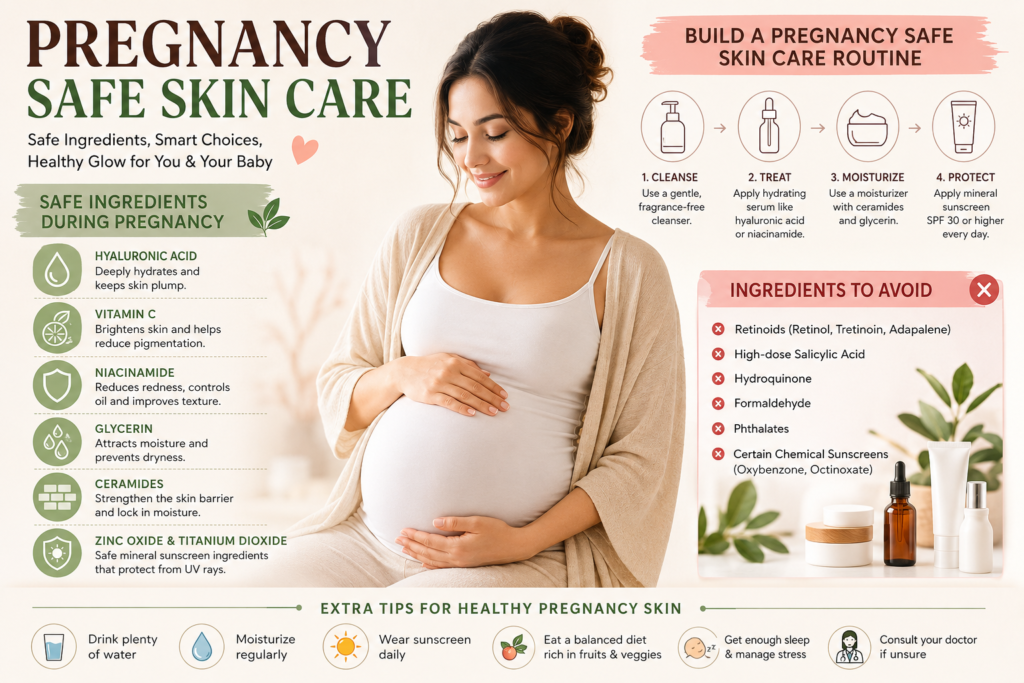
Safe Skincare Ingredients During Pregnancy
Fortunately, many skincare ingredients are considered safe for everyday use while pregnant.
Hyaluronic Acid
Hyaluronic acid is one of the best ingredients for pregnancy safe skincare. It deeply hydrates the skin without penetrating deeply into the bloodstream.
Benefits include:
- Long-lasting hydration
- Reduced dryness
- Improved skin elasticity
- Softer complexion
Vitamin C
Vitamin C is an excellent antioxidant that helps brighten the skin and reduce pigmentation caused by hormonal changes.
It also supports collagen production and protects against environmental damage.
Niacinamide
Niacinamide is gentle and effective for pregnant women experiencing acne, redness, or uneven skin tone.
Its benefits include:
- Reducing inflammation
- Strengthening the skin barrier
- Controlling excess oil
- Improving skin texture
Glycerin
Glycerin attracts moisture to the skin, making it ideal for dry, itchy skin during pregnancy.
Ceramides
Ceramides help repair the skin barrier and prevent moisture loss, especially when pregnancy causes increased sensitivity.
Zinc Oxide and Titanium Dioxide
These mineral sunscreen ingredients sit on top of the skin rather than being absorbed.
They provide broad-spectrum protection against harmful UV rays and are considered among the safest sunscreen options during pregnancy.
Skincare Ingredients to Avoid During Pregnancy
While many skincare ingredients are safe, some should be avoided unless specifically recommended by your healthcare provider.
Retinoids
Retinoids, including Retinol, Retin-A, Tretinoin, and Adapalene, are commonly used to treat acne and wrinkles.
High doses of Vitamin A have been associated with birth defects, making retinoids one of the most important ingredients to avoid during pregnancy.
High-Dose Salicylic Acid
Small amounts found in face cleansers may be acceptable, but high-strength salicylic acid peels and treatments are generally avoided during pregnancy.
Hydroquinone
Hydroquinone is used to lighten pigmentation but has a high absorption rate through the skin. Most healthcare professionals recommend avoiding it until after pregnancy.
Formaldehyde
Sometimes found in nail products and hair treatments, formaldehyde exposure should be minimized during pregnancy.
Phthalates
Phthalates are often present in synthetic fragrances and some cosmetics. Choosing fragrance-free products can reduce exposure.
Chemical Sunscreens
Some doctors recommend avoiding certain chemical sunscreen ingredients such as oxybenzone due to concerns about hormone disruption. Mineral sunscreens are generally preferred.
Building a Pregnancy Safe Skin Care Routine
Creating a simple routine with safe ingredients is often the best approach.
Step 1: Gentle Cleansing
Use a fragrance-free, sulfate-free cleanser twice daily.
Avoid harsh scrubs that may irritate sensitive pregnancy skin.
Step 2: Hydrating Serum
Apply a serum containing hyaluronic acid or niacinamide to maintain hydration and strengthen the skin barrier.
Step 3: Moisturizer
Choose a moisturizer rich in ceramides and glycerin to keep skin soft and prevent dryness.
Step 4: Sunscreen
Daily sunscreen is essential during pregnancy because hormones increase the risk of pigmentation.
Choose a broad-spectrum SPF 30 or higher mineral sunscreen with zinc oxide or titanium dioxide.
Step 5: Evening Care
Repeat your cleansing routine before bed and apply a nourishing moisturizer to support overnight skin repair.
Managing Pregnancy Acne Safely
Pregnancy hormones often increase oil production, leading to breakouts.
Instead of using harsh acne treatments, try these safer alternatives:
- Gentle cleansers
- Niacinamide serums
- Azelaic acid (if approved by your doctor)
- Oil-free moisturizers
- Non-comedogenic sunscreen
Avoid picking pimples, as this can increase scarring and pigmentation.
Treating Melasma During Pregnancy
Melasma, also called the “mask of pregnancy,” appears as dark patches on the cheeks, forehead, nose, and upper lip.
Although melasma usually fades after childbirth, you can reduce its appearance by:
- Wearing sunscreen every day
- Wearing wide-brim hats outdoors
- Using Vitamin C serum
- Avoiding excessive sun exposure
Patience is important, as aggressive skin-lightening treatments should wait until after pregnancy.
Stretch Mark Prevention
Stretch marks develop as the skin stretches rapidly during pregnancy.
Although genetics play a major role, keeping the skin moisturized may improve its elasticity.
Helpful ingredients include:
- Shea butter
- Cocoa butter
- Hyaluronic acid
- Natural oils such as coconut oil and almond oil
Massaging moisturizers into the abdomen, hips, thighs, and breasts can also improve skin comfort.
Dealing with Dry and Itchy Skin
Dryness is another common concern, especially during the second and third trimesters.
Tips include:
- Drink plenty of water.
- Use lukewarm water instead of hot showers.
- Apply moisturizer immediately after bathing.
- Use a humidifier during dry weather.
- Choose fragrance-free skincare products.
These simple habits can significantly reduce irritation.
Choosing Pregnancy Safe Makeup
Many women continue wearing makeup throughout pregnancy.
Look for products labeled:
- Non-comedogenic
- Fragrance-free
- Hypoallergenic
- Dermatologist-tested
Mineral-based foundations are often a good choice for sensitive skin.
Always remove makeup before bedtime to keep pores clear.
Natural Doesn’t Always Mean Safe
Many people assume that natural skincare products are automatically safe during pregnancy.
However, some essential oils and herbal extracts may not be recommended.
Examples include:
- Rosemary oil
- Clary sage
- Wintergreen oil
- Jasmine oil in concentrated amounts
Always read product labels carefully and consult your healthcare provider if you’re uncertain.
Lifestyle Tips for Healthy Pregnancy Skin
Good skincare starts from within.
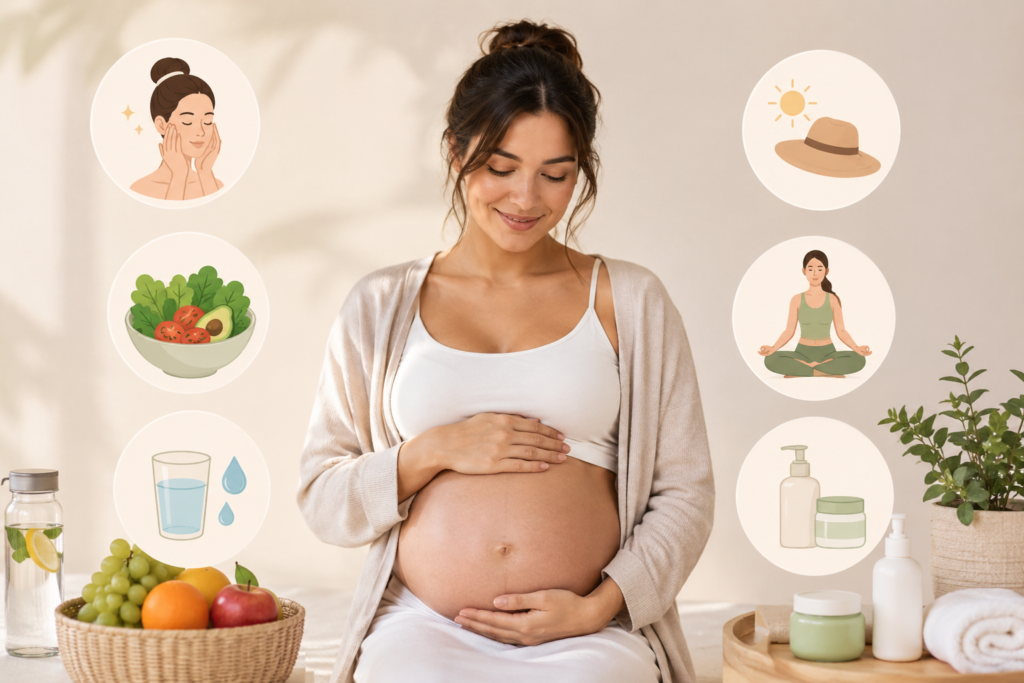
Support healthy skin by:
- Eating a balanced diet rich in fruits and vegetables
- Drinking enough water daily
- Sleeping 7–9 hours each night
- Managing stress through gentle exercise or meditation
- Avoiding smoking and alcohol
- Taking prenatal vitamins as recommended
Healthy habits contribute to glowing skin and overall wellness.
Common Pregnancy Skin Care Myths
Myth 1: You Should Stop All Skincare Products
False. Many skincare ingredients are completely safe during pregnancy and help manage common skin concerns.
Myth 2: Acne Means You’re Having a Girl
There is no scientific evidence linking acne severity to your baby’s gender.
Myth 3: Stretch Marks Can Always Be Prevented
Unfortunately, genetics strongly influence stretch marks. Moisturizing helps improve skin comfort but cannot guarantee prevention.
Myth 4: Sunscreen Isn’t Necessary Indoors
UV rays can penetrate windows, making daily sunscreen important even if you spend most of your time inside.
When to See a Dermatologist
Consult a dermatologist or healthcare provider if you experience:
- Severe acne
- Painful rashes
- Sudden swelling with skin changes
- Severe itching
- Rapidly changing moles
- Persistent pigmentation concerns
Professional guidance ensures you receive treatments that are safe during pregnancy.
Final Thoughts
Pregnancy is a unique and exciting chapter, and your skincare routine should evolve with your changing body. The key to pregnancy safe skin care is choosing gentle, nourishing products with ingredients that support healthy skin while avoiding those that may pose unnecessary risks.
A simple routine that includes a mild cleanser, hydrating serum, moisturizer, and mineral sunscreen is often all you need to maintain radiant skin throughout pregnancy. Pair your skincare routine with healthy lifestyle habits, adequate hydration, and regular prenatal care for the best results.
Remember that every pregnancy is different. If you are unsure about a skincare product or ingredient, consult your healthcare provider before using it. With the right approach, you can enjoy healthy, glowing skin while keeping both you and your baby safe.
For more. Visit The Future Content